In this class I have had the opportunity to learn a lot of useful things about literature and poetry, while I enjoy using the blog to post my essays and interact with my classmates and my professor through this blog. Commenting and chatting helped me in improving my essays and not make the same mistakes over and over. Also, I have the alternative to ask to the professor about all kind of doubts I might have writing an essay. I recognize I didn't feel confident in this course at the beginning of this semester because English is my second language, and it could be interpreted as a disadvantage with my classmates. However, I believe I defeated that obstacle through the excellent teaching of the Professor Smith. Moreover, each essay I wrote in this semester made me improve in being more creative and develop my level of imagination using fantasy in order to interpret a poem, film or novel. To sum up, this class has changed me the perspective of a literature and poetry class because I have enjoyed each assignment, and I can use my ideas and write about what I like. Also, I will truly recommend this class to any of my friends because I am sure they will enjoy it as me as well.
Monday, June 14, 2010
Wednesday, June 2, 2010
Blog 15: Final Draft of "A Little Princess"
A Little Princess
Frances Hodgson Burnett (1849-1924) was a British-American writer. She is best known for children's novels, especially “A Little Princess”, which was written in 1904. The novel A Little Princess was inspired by real life events, although it has a touch of fantasy. The protagonist Sara believes that she is a princess and lives in a magical world of fairies, princes, and more fantastic characters. Early in the story the girl really does live like a princess with every available amenity. However, due to a misunderstanding about her father being killed in war, she is forced to work in squalor as a servant. She endures terrible hardship at the hand of the school headmistress, Miss Minchin. At the end of the novel, Sara's dreams all come true. "A Little Princess" has been adapted into musicals, a film, as well as television adaptations in New York and London. Acknowledging the important role of fantasy in this novel, I am going to use the Monomyth approach to describe the plot. As I said previously the protagonist of this novel is a little girl who is dealing with a tragedy, the school's director abuses her physically and psychologically. Sara Crew has the added mission of saving her friends from the wickedness of Miss Minchin.
A Little Princess is a story about a seven year-old girl named Sara Crew, continuously traveling with her adored father, Captain Crew. Sara lived happily in India, but unfortunately Sara's dad takes her to a school in London while he serves in war. Crew Captain is a very rich man and therefore Sara Crew does not have to worry about money. While her father is away she is attending a prestigious London school where the evil principal, Miss Minchin rules with an iron fist. She takes kindly to Sarah and Captain Crew because Miss Minchin obviously knows about the huge fortune that belongs to Sara and her father. Before Captain Crew goes to war, the Captain bought her a beautiful doll, which he called Emily. Sara is very excited about this gift and she clings to Emily. Sarah speaks to the doll as if it was really alive. This is an odd thing, that the teachers and classmates of Sara notice in her immediately and for this she is ostracized
Sara Crew is an innocent and spoiled girl who goes to live in a new place and knows not what to expect. Sara Crew becomes a hero in her school for having a special gift of storytelling to entertain the other girls in her school.
In the departure chapter of this novel, Sara Crew is sent to attend school in London. She doesn't like it; however she agrees to stay there because her father has to go to war in India. As "A Little Princess" develops, an important character appears, the Indian gentleman. He plays the role of the Sara's supernatural aid because he helps her with his magical powers, and he finds Sara's father. Sara feels so sad and lonely because of her father's death. Her belief in fantasy is gone, and she thinks her life doesn't make any sense without the love of her father. This situation could be interpreted as Sara being in the belly of the whale, because her world as a princess has crumbled as a result of the terrible news and Sara enters a deep depression.
So far Sara has enjoyed her stay at school but obviously she misses her father very much. Sara lives in luxury and creature comforts as well as the other girls who also have parents with deep pockets. All the girls enjoy many amenities, with the exception of one girl in particular, Becky, who is treated like a slave because she is a Negro and has no money. Sara feels touched by this situation and wants to help the Negro girl but the school principal does not allow it. Meanwhile, Sara enjoys telling stories of fantasy to her classmates, especially tales of enchanted princesses. Miss Minchin organizes a party to celebrate Sara's birthday, and in the midst of the celebration, Sara receives the worst news of her life: Sara's dad has died in war and the British government got hold of all his possessions and money. Miss Minchin decides to divest of all Sara's valuables and send her to live with Becky. The school principal tells Sara that if she wants to live in the school, Sara has to work like a slave, cleaning, cooking and doing other tasks that are very difficult for a young girl.
Miss Minchin and her sister, Amelia, undermine Sara. They send her to live in the dark and unpleasant attic with Becky, and she feels so sad that she no longer enjoys telling stories. Sara's eyes reflect a huge sadness, causing Becky to cry for Sara because she feels love for her and respects her like the princess she is. Becky even refers to Sara as "a little princess", but Sara refuses the preferential treatment, telling Becky that both of them are equal as servants who have to live together without privilege.
This novel shows how the little girl’s life has changed from wealth to poverty, and Sara is challenged by Miss Minchin for all the necessities she has. This is the time when the adventure of the novel starts as a result of her life changes. Sara wants to surrender and not think more about her fantasy world of princesses and fairies. Nevertheless, she is encouraged by Becky, her loyal friend and the rest of Sara's friends in the school. Additionally, Sara feels compelled to find out if it is true that her father is dead because she has a presentiment that her father is alive. By the middle of the story, Sara begins to suffer because of the extreme conditions of poverty, and because she works so hard to live in the school and follow all Miss Minchin's instructions. Thereafter, the novel describes how Sara meets the Indian man and how the fantasy becomes real in her life with the help of his mysterious magical powers.
Sara continues doing what Miss Minchin says without complaining and before Sara goes to sleep, girls enter the attic to listen to Sara's stories. This is the way Sara feels relief and finds a reason to not surrender under the tough conditions. Moreover, Sara has to be careful that Miss Minchin does not know what happens in the attic every night because it is forbidden for the girls to talk with Sara. The following days continue with the same routine. Sara works all day, and she enjoys telling stories to her friends at night. One day, when Sara opens the window of the attic, she sees a man wearing a turban with a funny little monkey on his shoulder. Sara feels excited, and she wants to know more about her new neighbor. Sara has many good memories of India and decides that if her neighbors are from there that she would like to know them better.
Sara's friends continue meeting at night in the attic like they always do and Sara tells them a beautiful fantasy tales about princesses and dragons from India. The way Sara tells the stories sounds so real that the girls imagine and see what is happening. However, Miss Minchin discovers what the girls are doing with Sara, and then furiously yells at and punishes them. The little girls go to their rooms while Sara and Becky stay in their dirty attic without food and are not permitted to leave. They feel so sad, but Sara thinks it is time to imagine they are princesses, in a beautiful room with food, flowers, nice clothes and more special things. At first Becky doesn't like what Sara says but after a while she warms up to the idea. They see the horrible, nasty, dark room as the abode of a princess. It is the place where anyone would desire to be. Sara and Becky fall asleep and the next day when they wake up they find something marvelous. They think it is a dream, but it is real. All they imagined the previous day is now real, and before them lays delicious food, a huge and comfortable bed with soft sheets, colorful curtains and both girls wear wonderful clothes. Sara and Becky cannot understand how this has happened. The one responsible for the miracle is man their neighbor from India who and his boss and an injured soldier who has amnesia. The Indian man has magic powers that he uses to help Sara escape the pain of Miss Minchin's cruelty.
Nevertheless, Sara is so unlucky because Miss Minchin finds what is in the attic. Feeling surprised about what is there; Miss Minchin decides to lock up Sara and calls the police because she thinks Sara is a thief. In the moment the police arrive, Sara escapes from the window risking her life. It is during a strong thunderstorm, but Sara successfully arrives at the next home where the mysterious Indian man lives. Meanwhile, Miss Minchin, in the company of the police wants to catch Sara but something changes in that instant. Sara sees her father, the Captain Crew. However, he doesn't recognize her, and Sara Crew screams: "Father is me Sara, your daughter. Papa!.” Miss Minchin grabs her strongly to give her to the police. Finally, Captain Crew obtains his memory and he remembers his daughter so he takes Sara from Miss Minchin’s arms.
Fortunately, Miss Minchin loses her job as a director of the school, and she is currently working as a servant in the same school while Sara and Becky become princesses. They are going to live in India with Captain Crew in a terrific castle with everything they want. By the end of Sara's adventure, she is brave enough to dare to confront Miss Minchin who was a ruthless woman without any feelings. Miss Minchin's plans are destroyed when the Indian gentleman helps Sara with his powers to get free and find her father. When Captain Crew recovers his memory, he rescues Sara from the evil Miss Minchin. Fortunately Miss Minchin pays for all her abuses, and she is completely humiliated and forced to work as a servant herself. In the beginning of the novel Sara is rich. In the adventure she becomes poor and in the end Sara returns being rich and happy with her father living in India again. She returns to the magic world she is accustomed to living in but Sara is not alone, because she lives with Becky too.
A Little Princess novel gives many examples of how the life of a person can change in one second. When Sara has everything she wants, she loses it all and is forced to work very hard as an adult to support herself. Sara takes refuge in her fantasy stories and she really believes she is a princess and that nobody can harm her. Sara finds peace in the fantasy world and she cannot believe that all her dreams become true. Through the gift of imagination anyone can have the opportunity to create a perfect world, a world without sadness or conflict. The imagination is a beautiful jewel, one to be treasured throughout one’s life. When shared, this jewel can bring others joy and bliss as well.
Work Cited
"A Little Princess". Wikipedia. Web. May 24, 2010.
http://en.wikipedia.org/wiki/A_Little_Princess
Burnett, Frances Hodgson. A Little Princess. New York: Sterling Publishing, 2005. Print.
Blog 14
Monday, May 24, 2010
Blog 13: A Little Princess (In progress)
A Little Princess is a story about a seven year old girl named Sara Crew continuously traveling with her adored father, Captain Crew. Sara lived happily in India, but unfortunately Sara's dad takes her to a school in London while he attended the war. Crew Captain is a very rich man, and therefore, Sara Crew does not have to worry about money. She is staying at a prestigious London school where the evil principal, Miss Minchin. She takes kindly to Sarah and Captain Crew because Miss Minchin obviously knows about the huge fortune that belongs to Sara and her dad. Also, the director of the school does not want to miss the opportunity to have a lot of money for the care of the little Sara. Before the Captain Crew goes to war, the girl bought her a beautiful doll, which he called Emily. Sara is very excited about this gift and she clings to both the affection she feels for Emily, Sarah speaks as if the doll was really alive. That is an odd fact that teachers and classmates of Sara noticed in their behavior
Sara Crew is an innocent and spoiled girl who goes to live in a new place and not knowing what awaits you with strangers. For as the story continues, it is clear as Sara Crew becomes a hero in school for being a girl who has a special gift of storytelling to fantasy to entertain the other girls in her school.
So far Sara has enjoyed her stay at school but obviously she misses her father so much. Sara lives in luxury and creature comforts as well as the other girls who also have parents with deep pockets. All the girls enjoy many amenities, but not one of them. One girl in particular that is treated as a slave because he is black and has no money like the other girls. Sara feels touched by this situation and wants to help but the school principal does not allow it. Meanwhile Sara enjoys telling stories of fantasy to her classmates, especially the tales of enchanted princesses. Miss Minchin organizes a party to celebrate Sara's birthday, and in the midst of the celebration, Sara received the worst news of his life. Sara's dad has died in war and both the Governor got hold of all his possessions. So Miss Minchi decides to divest of all Sara's valuables and sent her to live with Becky, the girl who is a slave. The school principal tells Sara that if she wants to live in the school, Sara has to work like a slave, cleaning, cooking and doing other tasks that are not appropriate for a girl of seven years.
Knowing her tragedy, Sara feels so sad that she doesn't want to tell more fantasy stories to the girls. Sara is undermined by Miss Minchin and her sister, Amelia Minchin. They send Sara to live in the dark and unpleasant attic with Becky. Sara's eyes reflects a huge sadness that Becky cries for Sara because she feels love of her and respect her like the princess she is. Even Becky tells to Sara "A Little Princess", but Sara refuses it and tells her both of them are equal, are sevants who has to live together without any privilege.
This novel shows how the little girl has changed her life from rich to poor, and Sara is challenged by Miss Minchin for all the necessities Sara has. Also, Sara has a mission to accomplish, to find out if it is true that her father is dead. By the middle of the story, it talks about how Sara suffers because of the extreme conditions of poverty, and she works so hard to live in the school and follows all Miss Minchin's instructions.
A day when Sara has to buy some food for the school, she sees some people move her to the school, and she is curious about that. Sara continues doing what Miss Minchin says without complaining about any order, and before Sara sleeps, many girls enter to the attic waiting for Sara's fantasy stories. That is the way Sara feels relief, and she finds a reason of not surrender in her tough conditions. Moreover, Sara has to be careful that Miss Minchin cannot know what happens in the attic every night because it is forbidden talking with Sara. The following days continue the same routine. Sara works all day, and she enjoys telling fantasy stories to her friends at night. Until a day when Sara opens the window of the attic, she sees a man wearing a turbant and looking like an Indian with a funny little monkey on his shoulder. Sara feels excited, and she wants to know more about her neighbors. Sara has many good memories about India, and if her neighbors are from India, she would like to know them better.
Sara's friends meet a night in the attic like always they do, and Sara tells them a beautiful fantasy tale about princess and dragons from India. The way Sara tells the story sounds so real, that the girls imagine and see what is happening. It is a magic moment. However, Miss Minchin discovers what the girls do with Sara, and the furious school director yells at them and punishes them. The little girls go to their rooms, and the servants, Sara and Becky stay in their dirty room without food and any permission to go out. They feel so sad, but Sara thinks is time to imagine they are princess, in a beautiful room with food, flowers, nice clothes, and more special things. At the beginning, Becky doesn't like what Sara says, but after a while she likes the idea. They see the horrible, nasty, dark room as a room of a princess. The place where anyone desires. Sara and Becky fall sleep, and the next day when they wake up, it occurs something marvellous. They think it is a dream, but it was real. All they image the previous day is real, in other words, it appears delicious food, a huge and confortable bed with soft sheets, colorful curtains, and both girls wear wonderful clothes. Sara and Becky cannot understand why they have all of that, or who brings it. The real responsible of such amenities is man from India who lives next to the school with his monkey and his boss and a sick man who has amnesia. The Indian man has magic powers that he uses to help Sara from Miss Minchin's cruelty.
Nevertheless, Sara is so unlucky because Miss Minchin looks what is in the attic. Feeling sorprised about what is there, Miss Minchin decides to lock up Sara and calls the police because she thinks Sara is a thief. In the moment the police arrives, Sara escapes from the window risking her life. It is a strong thunderstorm, but Sara succeesfully arrives to the next home where the misterious Indian man lives. Sara feels so scared. Meanwhile, Miss Minchin in the company of the police want to catch Sara, but something changes in that instant, Sara sees her father, the Captain Crew. However, he doesn't recognize her, and Sara Crew screams: "Father is me Sara, your daughter. Papa!". Miss Minchin grabs her strongly to give her to the police. Finally, Captain Crew obtains his memory, and he remembers his daughter, so he takes Sara from Miss Minchin arms.
Fortunately, Miss Minchin loses her job as a director of the school, and she is currently working as a servant in the same school while Sara and Becky become princess. They are going to live in India with Captain Crew in a terrific castle with everything they want.
Work Cited
"A Little Princess". Wikipedia. Web. May 24, 2010.
Monday, May 17, 2010
Blog 12: A Little Princess

Sunday, May 9, 2010
Blog 11: My Chosen Story "A Little Princess"
A Little Princess is a 1904 children's novel by Frances Hodgson Burnett. It is a revised and expanded version of Burnett's 1888 serialized novel entitled Sara Crewe: or, what happened at Miss Minchin's boarding school, which was published in St. Nicholas Magazine.
This is a story about a different kind of princess than one might imagine; a princess that is an orphan - lonely, cold, hungry and abused. Sara Crewe begins life as the beloved, pampered daughter of a rich man. When he dies a pauper, she is thrown on the non-existent mercy of her small-minded, mercenary boarding school mistress. Stripped of all her belongings but for one set of clothes and a doll, Sara becomes a servant of the household. Hated by the schoolmistress for her independent spirit, Sara becomes a pariah in the household, with only a few secretly loyal friends. But through her inner integrity and strength of will, Sara Crewe maintains the deportment, inner nobility and generous spirit of a "real" princess.
Sara discovers through her fantasy tales, she can live in a magic world being a princess where nobody can hurt her, and all her dreams or imagination would become true.
I think I am going to write about the Hero’s Quest and symbols because this novella follows all the characters of critical approach. In other words, the little girl plays the “Cinderella” role because she has to experience many problems when she believes her father is dead. As a consequence of all Sara’s life changes, the only way of feeling good is by imagining and believing she is in other world living as a princess rounded of luxury.
Link: http://en.wikipedia.org/wiki/A_Little_Princess
Tuesday, May 4, 2010
Blog 10: Reflection
Learning about the Hero's Quest is important to help us to identify each element, symbol, achetype, and more details in a film. Besides, aplying the reached knowledge with a movie of my prreference it is very interesting. I chose "Hercules", an animated movie which was based in the Greek Mythology because I have watched it from many years ago, and I really like its plot. You might think it is so easy to write an essay about this movie, but it is not. I had to watch Hercules again and find the information about each character in order to get what the Professor asked us to do. This is the reason why my essay is very broad, and I couldn't miss any detail because I realize all the tokens of this movie are essentials to figure out the requiered elements of the Hero's Journey described by Joseph Campbell.Image Link:
http://disneyfansite.iespana.es/jose/herculesfoto.jpeg
Sunday, May 2, 2010
Blog 9: Hero's Quest
Hercules
Hercules is a 1997 American animated film produced by Walt Disney Feature Animation, and it is based on the Legendary Greek Mythology hero Heracles, (known in the film by his Roman name, Hercules), the son of Zeus, in Greek mythology (Wikipedia). This film follows each step of the "Hero's Quest" described by Joseph Campbell. It contains a popular hero who has an important mission to accomplish although he faces all the obstacles throughout his adventure.
This is a brief description of what happens in the beginning of the movie "Hercules". In addition, it is the way to understand better the call of adventure; the reason why Hercules is separated from his family, and why he wants to fight and become a hero.
The movie begins with the celebration of the Hercules’s birth as the son of Zeus, the king of the Gods. Hades, the lord of the Underworld wants to control the universe and in order to achieve his plans, he asks the Fates (three oracles that can view the past and predict the present, and future) what he can do to destroy the Gods of the Olympus and become the supreme God of the entire universe. The Fates tell Hades, that in eighteen years a planetary alignment will show the exact place where Zeus has trapped the Titans. The Fates also explain that there is only one person who can defeat Hades, Hercules. So Hades decides to steal Hercules away and him. He sends his minions Pain and Panic to carry out the task. Upon Hades’ orders Pain and Pain steal Hercules, and they give him a magical potion to convert him into a mortal. Hercules does not drink the last drop of the potion and because of this he keeps some of the power of a God. Pain and Pain are not able to kill Hercules.
Hercules is found by a poor couple, and they decide to raise him. During Hercules’ childhood everyone notices his strength, and people from a village start to shun him because he doesn’t look like a normal human. Hercules’ adoptive parents tell him the truth about his background, and they give him a medallion of the Gods (a Talisman) that was around his neck when they found him.
From now it is going to be depicted many mythological figures such as Hercules (the strongest archetype) who performs a hero, Zeus is the hero's father, Hades is the antagonist, Pegasus is the Hercules' winged horse, Philocteles is Hercules' trainer, and more characters which make a significant role in this film.
Knowing his origin, Hercules decides to go to the temple of Zeus and find out who his true parents are and why he is not living with them (The Call to Adventure). When Hercules arrives at Mount Olympus, Zeus tells him that somebody stole him when he was a baby and converted him into a mortal. Hercules, feeling surprised by the whole story, wants to live again as a God along with his real family. Zeus says it is impossible until Hercules fights as a real hero and shows everyone that he has all the qualities necessaries to become a God. Only then can he be accepted with the rest of the Gods of Olympus.
Hercules accepts the challenge and promises to his father he will do everything to become a true hero, and he will not disappoint him (Crossing of the First Threshold). Zeus gives to Hercules a gift, a winged horse which is called Pegasus and suggests him to find the satyr Philoctetes, a trainer of heroes, to achieve his task (Supernatural Aid). He goes to talk with Philocteles and asks him for help, but “Phil” refuses him. Nevertheless, Hercules is very persuasive, and he insists as much as he can until “Phil” agrees to train him.
During Hercules' challenges, he will face many monsters-Greek mythological creatures that are going to complicate Hercules' life. According to the Greek Mythology website, "Nessus, is a centaur; Hydra, is a serpent-like chthonic water beast that possessed nine heads; aClyclop a giant that has a sigle eye in the middle of its forehead; a Cerberous, is a multi-headed hound which guards the gates of Hades, to prevent those who has crossed the river Styx from ever escaping." Also, this movie has more Greek mythological creatures such as The Fates, Pegasus, and a satyr (Philocteles). All the previous mentioned characters play in this movie a supernatural role as a consequence of their powers.
Because Hercules is motivated with being a hero, his adventure starts when he decides to develop his strength and turn into a truth hero who deserves to live as a god in the Olympus. This adventure is getting excited when Hercules meets with Megara, a girl who is the temptation and the obstacle of his goal. Hercules prefers to give his power to Hades with the condition of not hurting Meg. However, this woman also portrays the passion and becomes the best reason to beat the lord of Underworld, Hades. Hercules has trained during a long period of time, knowing when he is ready to fight; “Phil” will take him to the city of Thebes to show what he has learned so far. People from Thebes are tired of living in fear, and they need a hero to save them. Hercules is the indicated person to help them (The road of trials- 1). In other hand, Hades is aware of the existence of Hercules, and he wants to find a way to destroy Hercules. Hades uses his minions Pain, Panic, and Megara, a woman that Hercules saved from a centaur Nessus before coming to Thebes, in order to put him a cheat. Hercules fights against a horrible monster, the Hydra. It is a strong battle, and the Hydra swallows Hercules. People think Hercules is dead, and they lose the hope in their new hero. Suddenly, when Hercules is inside the monster, he cuts its neck and breaks free again (Belly of a Whale). Every time Hercules cut the Hydra's head, it regenerates more and more heads until Hercules does not have any place to hide. However, Hercules kills the Hydra, and all people in Thebes treat Hercules as a real hero. Unfortunately, Zeus doesn’t share the same opinion, and he tells to Hercules he is not a true hero yet, so Hercules has to work very hard on that.
In this next stage, Hercules has the opportunity to show his ability as a hero, and he defeats an enormous monster, but it is not enough to be a god. He has to pass many tests before being accepted as a real hero. Otherwise, Hercules has to keep living as a mortal, and his lover is going to die.
In addition, Hades is so upset seeing Hercules’ battle with Hydra that he orders to “Meg” to find the Hercules’ weakness, but she cannot refuse him because her soul belongs to Hades (The Road of trials-2). Megara starts to seduce Hercules with the purpose to find what the Hercules’ debility is, so Hades will use against him (Meeting with the Goddess). Hercules falls in love with “Meg”, but “Phil” doesn’t agree with their relationship because he does not trust “Meg”. Phil discovers his suspicions are correct when he sees Meg talking with Hades about Hercules. Of course, Phil warns Hercules about the real intentions of Meg, but Hercules does not believe him because he loves her. Hades takes advantage of that situation and makes a deal with Hercules, to exchange his strength for Meg’s freedom (Woman as Temptress). Hades plans to use Hercules' strength to liberate the Titans and destroy Zeus (Atonement with the Father). Hades humiliates Hercules telling him the truth about Meg, and he is disappointed and regretted about how he treated Phil when he told him that Meg betrayed him. Once all Titans are free, Hades sends one, a Cyclops to kill Hercules. Although Hercules is not strong, he fights with the monster and defeats it. Nonetheless, Hercules was in risk to dying when a huge piece of concrete column falls down, but Meg saves him because she loves him too. As a result of Meg is hurt, the Hades’ deal is broken and Hercules gets his strength again (Apotheosis). While Hercules is dealing with the Cyclops, his father Zeus and the other Gods are in trouble because the Titans are attacking them. Successfully Hercules arrives on time to help everybody and catch the Titans with Zeus (The Ultimate Boon). Hercules saves the Olympus, but it is too late for Meg because her soul went to the Underworld (The road of trials-3)
Hades is completely frustrated to see that Hercules won the war against the Titans, and Zeus and the rest of gods are free in their realm. But Hades is not going to stay without doing anything; he has a second plan, to use Meg. Hercules does not have another chance and just follows Hades to the Underworld. When Hercules goes to hell, Hades tells him Meg is already dead, and he owns her spirit. Hercules offers to Hades his soul and takes Meg away from the river Styx along with her soul. But there is a big problem; the river can take the life out of anybody who is living. Through of these difficult conditions, Hercules grabs Meg’s soul, and through this act he becomes a God, an immortal (The Crossing of the Return Threshold). After that, Hercules throws Hades into the river Styx and all the vengeful souls keep this from escaping. Then, Hercules goes to put Meg’s soul back in her body, and Meg resurrects. After, the couple goes to the Olympus, and the Gods celebrate the arrival of Hercules as a God. Zeus and her wife Hera are proud of Hercules because he showed the qualities of a God when he offered his own life to rescue his love, Meg. Also, Zeus tells him: “A real hero is not for the size of his muscles, a truth hero is a person who fights with his heart” (Master of two Worlds). All gods in the Olympus are enjoying Hercules’ welcome to his old home. Nevertheless, Hercules realizes his life without Meg would not make sense, even as immortal, so he denies being a god. He chooses to live in the earth like any human with Meg (Refusal of the Return). In the end the gods create an image of Hercules in the sky with stars, and Hercules is remembered as the greatest hero in the city of Thebas (Freedom to Live).
Careful analyzing this movie, one finds many symbols and similar archetypes, such as a hero, father, and Gods. Referring to the Greek Mythology can help understanding each particular element. Hercules' story gives us a valuable lesson to be applied in real life. In other words, if we have a specific goal in our lives, we cannot surrender until it is achieved and give all our effort with passion, with our heart. Not just doing something for what other people might think about you, do it because you feel it and because you want to do it and feel proud of yourself.
Work Cited
Hercules. Dr. Ron Clements and John Musker. Pref. Tate Donovan, Danny DeVito, James Woods. RKO, 1997. Film
"Hercules." Wikipedia. Web. 29 Apr. 2010
<http://en.wikipedia.org/wiki/Hercules>.
"Mythological Creatures." Greek Mythology. Web. 29 Apr. 2010.
<http://www.greekmythology.com/Myths/Creatures/creatures.html>.
Sunday, April 25, 2010
Blog 7: Hero's Quest and Film
Hercules Hercules is a 1997 American animated film produced by Walt Disney Feature Animation and released by Walt Disney Pictures. The film is based on the legendary Greek mythology hero Heracles (known in the film by his Roman name, Hercules), the son of Zeus, in Greek mythology.
The son of Greek gods Zeus and Hera, Hercules is stolen as a boy by the minions of Hades, lord of the underworld. Forced to live among humans, Hercules is turned into half-god and half-mortal after drinking a forbidden potion brewed by Hades' right hand men, Pain and Panic. Now Hercules has the remarkable strength of a god, but is trapped in the body of a human, and before he learns how to use his power properly he goes through a typically adolescent awkward period. In order to become a god and return to his home on Mount Olympus, Hercules must prove himself a true hero on Earth. With the assistance of Philotes, a plucky satyr known as "Phil," the grown-up Hercules learns to use his strenght to his advantage and becomes a famous and benevolent protector of those around him, successfully battling a variety of gods and monsters. However, Hades, wanting to cut Hercules down to size, sends his secret weapon after him--Megara, a seductively beautiful woman under Hades' control, who is to win Hercules' heart and render him helpless against the forces of the underworld.
Work Cited
Wikipedia. "Hercules (1997 film)". Disney Productions. Sep 25, 2008. Web. Apr 25, 2010.
Image: http://images.movieeye.com/store/images/hercules-movie-poster.jpg
Thursday, April 22, 2010
Blog 8: Fairies & Fauns/Fawns
While many of these depictions are considered purely fictional, creatures such as fairies, somewhat like human beings but with abilities that transcend the physical realm, find correlates in the angels or other spiritual beings of many religions. When a believe in the afterlife and the realm are accepted, the existence of beings that have such "supernatural" abilities becomes possible. Thus, it may be that the origin of such creatures lies not so much in the desire of human beings to experience all that the physical world that has to offer, but rather in fleeting experiences of creatures from the spiritual realm.
Puck is a mythological fairy or mischievous nature sprite. Puck is also generalised personification of land spirits.
In Roman mythology, a faun is a mythical beast with the upper torso of a human and the legs and tail of a goat, sometimes depicted with goat's horns coming out of their skulls; a fawn is a young deer.
The Romans also a god named Faunus and a goddess named Fauna, who, like fauns were goat-people. Faunus was the horned god of the forest, plains and fields; when he made cattle fertile he was called Innus. He came to be equated in literature with the Greek god Pan.
According to the previous information about faries mythology and fauns or fawns, the fauns that were mentioned on the second stanza of the poem "Broken Wing" represent the field spirit, salvation and motivation as well. Fauns are half human and half goat with horns that represent strength, dignity of the divinity, and horns are extremely durable. These mythological creatures might have the power to heal the fairy's wing and her spirit could become strong enough to shine blue as she did it before.
Sources:
Saturday, April 17, 2010
Blog 6: Essay 3
In midland hills where cedars thrive,
A rare and wistful sight:
Her iridescence could not hide
A fairy shorn of flight
She sat beneath the morning sky,
Devoid of healing dew,
Though fawns had lately frolicked there,
Her spirit shimmered blue.
Bluer than the bonnets fair
That in springtime bloom,
Bluer than the berries round,
Unfairly-like her gloom.
For what could harm a fairy,
Whose essence is the light,
Whose joy reigns unencumbered
Through all the seasons bright?
Might I, mere mortal, intervene
To soothe her wing so torn?
My flute inspired by fairy song,
The notes aloft are born.
Bluer than the summer sky
Unmarred by threatening storm,
Bluer than the bluebird's call,
Notes match her fragile form
Then slyly did I change my song
To that which might enhance
A memory of brighter days,
A fairy circle dance.
Soon did she lift a luminous wing
As fairy tune danced on,
A gentle breeze enveloped her,
She shimmered, then was gone.
Bluer than the bonnets fair
That in the springtime bloom,
Bluer than the berries round,
Away the fairy's gloom.
Dorothea Barth was born in Amsterdam, The Netherlands, and moved to the United States when she was nine years old. She started feeling interested about learning and writing new words when she studied English. As a result of her attraction to writing, she began to write poetry since she was approximately ten years old. Although Barth is not a really famous writer, she has been recognized as an important freelance writer. Dorothea Barth has also worked as a technical writer, an editor, and a proposal writer. She now combines her creative writing and musical talents, often writing about music--whether it is an essay, an interview, or a poem. She finds that being a musician is most helpful in writing poetry, especially since her preference is for metered verse.
The poem contains nine stanzas with four lines in each of it. The poem is narrow and centered on the page. The rhyme scheme is ABAB on the first stanza. Moreover, some stanzas have alliterations-the use of the same consonant at the beginning of each stressed syllable in a line of verse. The first and third line in others stanzas start with the same letter and the second and fourth line finish with rhyme of scheme. For example, the first and third line on the stanza 3 begin with the letter “B”, and the other two lines end with the words “bloom” and “gloom” which make a scheme of rhyme. The first line of stanza 5 is “Might I, mere mortal, intervene”, there are three words which the first consonant begin with the letter “M”. Also, stanza 3 and 9 are very similar, except of the first word of the last line on both stanzas. The line “Bluer than…” is repeated twice in the stanza 3, 6, and 9. Three lines of the stanza 5 has a scheme rhyme because two words end with the letters “orn”, and the other word ends with “ong”, so all these three words have a similar sounding and a similar ending.
“Broken Wings” refers to a fairy that could not fly because one of her wings is broken. The fairy felt sad and isolated from the rest of the fairies’ group as a result of the fairy’s problem. While everybody enjoyed the beautiful day, the fairy was sitting beneath the morning sky (line 5). In addition, the poem has a little description of the spring time because it has some words such as blue, bloom, summer sky, bluebird, and berries (stanza 3, 6, and 9). The essence of any fairy is the light (line 14), and the only way she could feel better with her spirit shimmered blue (line 8) is flying as she did. However, someone (it could be a man) tries to help the fairy and heal her torn wing. After that, the fairies made a ritual, dancing in circle and the fairy that was hurt lift her wing and flew away looking beautiful and radiant than ever.
The relevant symbols of the poem “Broken Wing” are (1) sky, blue, light, wing, and bluebird; (2) song, circle, and dance; (3) fawns.
First of all, the poem is about a fairy that feels happy flying in a place where she would feel free, immortal, and full of innocence. The following symbols have similar connotations because they refer to eternity, spirituality, purity, and freedom.
According to the Dictionary of Symbolism, “shy represents infinity, eternity, immortality, and transcendence; it is the residence of the gods, it is omnipotence. The sky also is symbolic of order in the universe” (Cooper, 1978). “Sky” is the perfect place to get the fairy’s freedom. The color blue is most often associated with issues of the spirit and intellect. It is the color of sky and heaven. Its link to the sky also connotes eternity and immensity, time and space, and the color blue is also related with loyalty, fidelity, constancy and chastity. Blue may be truth and transparency, innocence and purity. “Blue” is a color which means staying in calm and the purity of a person (line 8). Also, the blue color represents a feminine spirit, in this case is the fairy because the poem repeats several times the pronoun "she" and "her". Light is the spiritual and the divine, and it is illumination and intelligence. It is the sun, and it is the avenger of evil forces and darkness. Light is knowledge. Purity, morality are connected terms as well. Cosmic energy, creative force and optimism are all related to light. “Light” reflects the mood of any person and determines if you're sad or happy depending on the situation in which you are. It could be related with the fairy’s spirit and her stronghold to overcome the difficulties of her life.
Other important symbols are song, circle and dance, which share some of their meanings such as expression of love, eternity, celebration. Furthermore, circular dance often mimic the circular motion of heavenly bodies and/or the revolution of the earth around the sun. Song can be an expression of happiness or love, adoration or homage. Birds’ songs are often linked to spring, and/or the dawn. A song also is associated with mourning and death, and it can be construed as a form of hypnosis or magic spell. A song may represent in the fairy’s poem a cure for her injured wing. The circle is a universal symbol with extensive meaning. It represents the notions of totality, wholeness, original perfection, the self, the infinite, eternity, timelessness, all cyclic movement, God. As the sun, it is masculine power; as the soul and as encircling waters, it is the feminine maternal principle. It symbolizes the cycle of time, the planet’s journey around the sun, the great rhythm of the universe, heaven and perfection as well as eternity. Dance can signify joy, celebration, and/or possession by a higher power, be it good or evil. The act of dancing is also linked with rhythm and transforming time into motion. Group dances can be a form of prayer or reverence. Dance is often linked tightly with creation, hence its bond magic. Because of all fairies remembered the good times, they made a circle dance to celebrate and honor their remembrances and hopefully think the fairy that had her broken wing would recover her health and fly again.
The tone of this poem seems as a song. If it is compared with a real song, the poem has many similarities. For instance, the “Broken Wing” poem contains nine stanzas in total, and if it is observed in detail, three of the nice stanzas are almost as lyrics and go after two stanzas. Besides, this poem repeats some words such as “sky”, “fairy”, “bluer”, “bloom”, and “gloom”. These words may infer freedom, spring time, and purity.
“Broken Wing” is a poem that shows how someone could feel when a person loses his or her freedom as consequence of a particular situation. Finding the particular meanings of the symbols, tone and the rhyme of each stanza make more understandable the poem. The title is very clear because most of the time the poem makes reference to the fairy’s broken wing. Furthermore, it describes how the fairy deals with her problem, feeling sad and her light was turned off. According to Wikipedia, fairies are generally described as human in appearance and having magical powers. In other words, if a fairy is not able to fly, she wouldn’t have her powers, and that is what is happening in this poem. However, the fairy recovers her freedom when her wing is fixed.
Works Cited
Barth, Dorothea. “Broken Wing”. Dorothea Barth Prose and Poetry. 2009. Dorothea Barth. Web. 17 Apr. 2010.
Barth, Dorothea. “Broken Wing.” Fairies World. Vallejo, California, 2009. Fairies & Fantasy Poems. Web. 17 Apr, 2010.
Dictionary of Symbolism. University of Michigan Fantasy and Science Fiction. 2001. Web. 17 Apr. 2010.
Lewis, C. S. The Discarded Image: An Introduction to Medieval and Renaissance Literature. Cambridge: Cambridge University Press. 1994. Print.
Symbols. HME Publishing. 1997-2006. Web. 17 Apr. 2010.
Wikipedia. Fairy. 11 Apr. 2010. Web. 17 Apr. 2010.
Friday, April 2, 2010
Blog 5: Essay 3 Preview
Saturday, March 27, 2010
Blog 4: Reflection
Wednesday, March 17, 2010
Blog 3: Tone and Symbolism
The tone of a poem reflects what the writer wants to express through his writings, and the feelings can be defined. Some possible attitudes are pessimism, optimism, earnestness, seriousness, bitterness, humorous, and joyful. An author's tone can be revealed through choice of words and details. For instance, the writer may want you to believe that the beginning of the poem is in a deep of sadness and great joy at the end like the poem "Broken Wings".
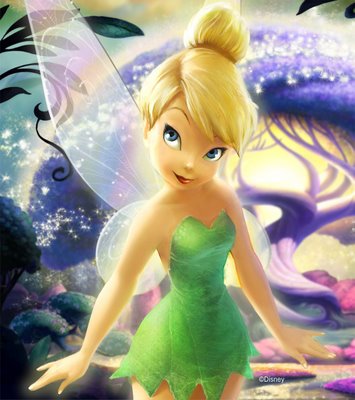
The symbolism could represent a person, place or object which has a meaning in itself but suggests other meanings as well. In the poem "Broken Wings" are some symbolism such as bluer than the bonnets, summer, sky, bluebird, and bloom.
The tone and symbolism are essential part of any poem because they contribute to a better interpretation of the poem, story, or any other type of literature. In "Broken Wings" is easy to see how it reflects the tone and symbolism with metaphors, repetitions of certain words or comparisons that help in a better understanding and to decipher what the meaning of the poem is and what the writer Dorothea Barth really wants to express through her way of writing.
Getting out of the fantasy, this poem teaches us that in spite of that sometimes we do not have the same physical abilities that others will always be a time when we need help from someone and that person could give us this help in a difficult situation without interest. The fairy was having a big trouble without one of her wings, and fortunately she was able to fly again with the support of a mortal, a regular person who did not have the power as a fairy.
Saturday, March 13, 2010
Blog 2: Fantasy Poem.

I found this poem on Google.com and this is the link: http://www.fairiesworld.com/poems/?p=204
Broken Wing by Dorothea Barth
In midland hills where cedars thrive,
A rare and wistful sight:
Her iridescence could not hide
A fairy shorn of flight
She sat beneath the morning sky,
Devoid of healing dew,
Though fawns had lately frolicked there,
Her spirit shimmered blue.
Bluer than the bonnets fair
That in springtime bloom,
Bluer than the berries round,
Unfairly-like her gloom.
For what could harm a fairy,
Whose essence is the light,
Whose joy reigns unencumbered
Through all the seasons bright?
Might I, mere mortal, intervene
To soothe her wing so torn?
My flute inspired by fairy song,
The notes aloft are born.
Bluer than the summer sky
Unmarred by threatening storm,
Bluer than the bluebird's call,
Notes match her fragile form
Then slyly did I change my song
To that which might enhance
A memory of brighter days,
A fairy circle dance.
Soon did she lift a luminous wing
As fairy tune danced on,
A gentle breeze enveloped her,
She shimmered, then was gone.
Bluer than the bonnets fair
That in the springtime bloom,
Bluer than the berries round,
Away the fairy's gloom.
This poem is about a fairy who is feeling very sad and painful because one of her wings was being torn apart and she could not heal it. The fairy was losing her powers and the light was essential for her life. So she could not fly with the rest of the fairies, and she felt lonely. Fortunately a very generous man helped her and when the fairy felt better, she flew looking more beautiful than ever in that shiny day.


